
Jaworkowe Wzgórze: not a website, a sales channel
For a new 10-apartment property in the Pieniny Mountains we built a website from scratch, connected to a central booking system, Booking.com, Airbnb and Nocowanie.pl. In the first 30 days, more than half of all bookings came through the property's own website.
The project in numbers
Share measured as the number of bookings made through the property's website relative to all bookings in the system, in the first 30 days after launch. It is a share of bookings — not of revenue and not a conversion rate.
The client and the starting point
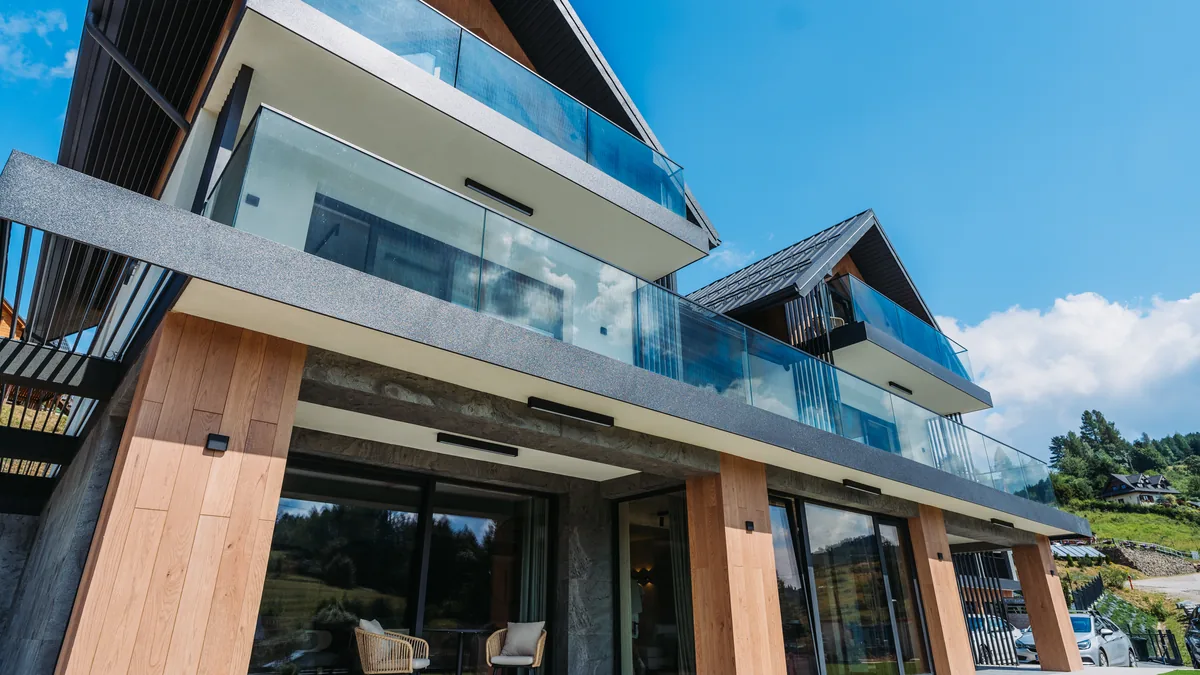
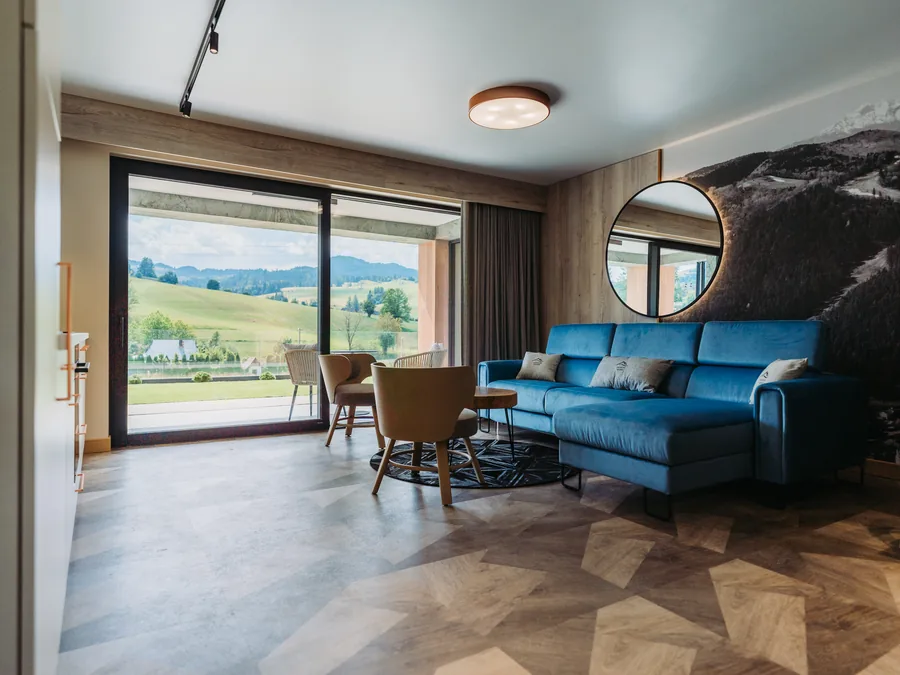
Jaworkowe Wzgórze Apartments is a new property in Jaworki near Szczawnica in southern Poland, opened in 2026: 10 apartments from 20 to 50 m², terraces overlooking the Biała Woda valley, a sauna, a year-round hot tub, a fire pit, a playground and an EV charger. The Homole Gorge is 900 metres away, Szczawnica 6 km.
The property started from zero — no booking history, no reviews and no recognisable brand online. The owner wanted to sell through the major booking portals, but also to build a direct booking channel under his own control from day one.
The problem we were solving
A property selling across several channels has to keep availability, prices, minimum stays, changes, cancellations and payments in sync — separately in every channel. Every manually copied booking is a risk, and the most expensive mistake is a double booking of the same apartment.
The second problem is dependence on intermediaries. Portals bring guests, but they charge commission and stand between the property and its guests. The goal was not to switch off Booking.com or Airbnb, but to build a direct channel next to them, running in the same system.
One system instead of several separate tools
We designed everything as one flow: traffic from Google, Maps, the blog and the portals lands on the property's website, the guest books and pays without leaving it, and the booking goes into the central reservation management system, which updates availability on every connected portal.
Traffic
Google, Maps, the blog, social media and booking portals send guests to the property's website.
Website
Offer, apartments, live prices and availability — in Polish and English.
Booking
Dates, guests, apartment, details and online payment — without leaving the site.
One calendar
The booking lands in the central system and availability updates on every connected portal.
Built from scratch for this specific property
We did not use a hotel template. The layout, components, the way apartments are presented and the booking path were all designed for this property, its offer and the way its bookings are managed.
- Two languages — Polish and English, correctly marked up for Google — around 80 pages in total.
- 10 apartments in several variants, each with its own page, photos and a live price.
- Wellness area, gallery, FAQ and an offer for companies and groups — answers to the questions guests ask before booking.
- Mobile-first design — most guests plan their trip on a phone. We fine-tuned details on real devices, not just in a simulator: on iPhone, the background behind the screen notch needed a different positioning approach than on other devices — a difference the simulator did not show.
A custom booking and payment flow
From the very first version of the website we built a custom booking flow, integrated directly with the property's booking system API — no generic embedded widget that cannot be matched to the brand.
- A custom date picker — full-screen on mobile, a two-month view on desktop, minimum-night rules and correct Polish plural forms for the number of guests.
- Apartment cards with live prices — guests only see apartments available for their dates, with the current price for the stay.
- Guest form and online payment — the whole path from choosing dates to paying happens in one consistent flow.
- Payment confirmations in two languages, sent from the website's server and styled to match the brand.
Two currencies, no mismatched amounts
The English version lets guests book in Polish złoty or in euro. We calculate and validate the price on the server rather than accepting it from the browser — so the amount a guest sees on the website is the same amount they see on the payment page. We verified the full flow on a real booking in euro.
Booking.com, Airbnb, Nocowanie.pl and the website in one calendar
All channels — Booking.com, Airbnb, Nocowanie.pl and the property's own website — are connected to one central calendar. A booking made in any of them updates availability in all the others. The owner does not check each portal separately or copy anything by hand, and the risk of a double booking is reduced to a minimum.
The system is set up so that more portals can be connected quickly, without rebuilding the website, whenever the property wants to enter new sales channels.
Data that keeps itself up to date
- “From … per night” prices on the apartment list are pulled from the booking system and refreshed every few minutes — no outdated prices after a rate change.
- Minimum stays on long weekends and holidays are read automatically from the system and refreshed regularly, instead of dates hard-coded into the website and easily forgotten.
- Availability is checked live for the selected dates and number of guests.
Less manual work, less room for error
The property's booking system did not automatically cancel bookings that guests had not paid for. We built our own register and a scheduled job that checks the actual payment and cancels unpaid bookings after a set time. The dates go back on sale by themselves, with no work for the staff.
Visible for the searches guests actually make
The website was designed for search engines from the start: heading and URL structure, titles and descriptions, a sitemap, structured data for a lodging business, FAQ and internal linking.
- Around 10 long-tail landing pages — e.g. dog-friendly stays, stays with a hot tub, stays near the Homole Gorge.
- The blog as part of the sales funnel — guides to the area: the Homole Gorge, the Biała Woda nature reserve, Dunajec rafting. Someone looking for a Homole Gorge trail finds the guide, learns the property is 900 metres from the entrance and can check available dates right away.
- Deliberate indexing decisions — in the English version, some long-tail pages are intentionally excluded from indexing even though they are ready. International guests do not search for local Polish place names in that form. We made this decision together with the client after looking at how people actually search.
A fast website and data on where guests come from
- Self-hosted fonts, subset to the characters actually used — around 45% smaller font files.
- Images in several resolutions chosen per device, priority loading of the main image, minified code.
- Cloudflare protects the website and shortens load times.
- Google PageSpeed: mobile 92 (performance), 97 (accessibility), 100 (best practices), 100 (SEO); desktop 99 / 100 / 100 / 100.
- Google Analytics 4 and Google Tag Manager with Consent Mode v2 — measuring traffic sources and guest behaviour before booking, in line with cookie consent requirements.
Verified on real data, not assumptions
We developed the website in short iterations: the client tested each version on phone and desktop, sent feedback with screenshots, and fixes came back within hours.
Every change to the booking flow was tested against real requests to the booking system before going live — on the system's actual response, not on the assumption that it “should work”. This caught, before launch, a bug where a guest could have seen a price in euro and been charged the same number in złoty — a difference of more than four times the amount.
More than half of bookings through the property's own website
In the first 30 days after launch, more than half of the property's bookings came through its own website — while Booking.com, Airbnb and Nocowanie.pl were running at the same time.
What this means for the property
- A booking made on the website carries no intermediary portal commission.
- The property has direct contact with the guest — it can invite them back and build its own base of returning guests.
- Traffic from Google, the blog and future ad campaigns goes straight into the property's own booking system, not to a portal.
- The property decides how its offer, photos and prices are presented.
- The portals keep working — as one of the channels, not the only way to reach guests.
Running a hotel, apartments, chalets or a guesthouse with several sales channels?
You don't need another online brochure. You need a system that connects your website, bookings, availability, marketing and analytics into one sales process. We design these from scratch.
Let's talk about your property →